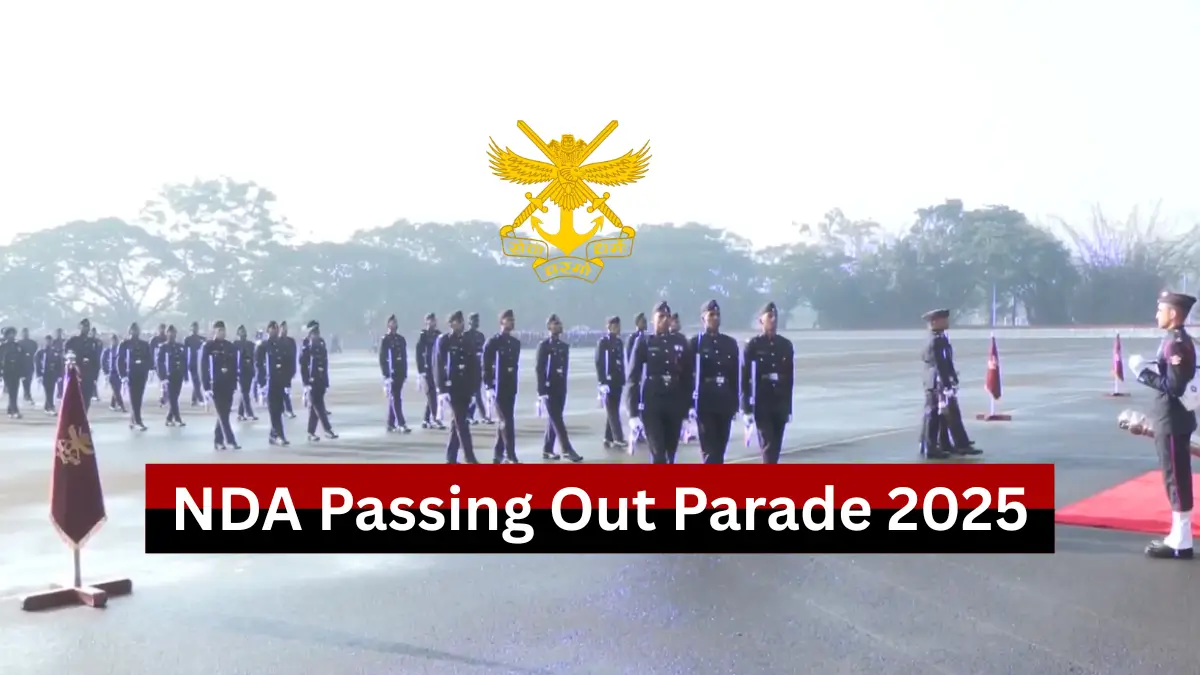
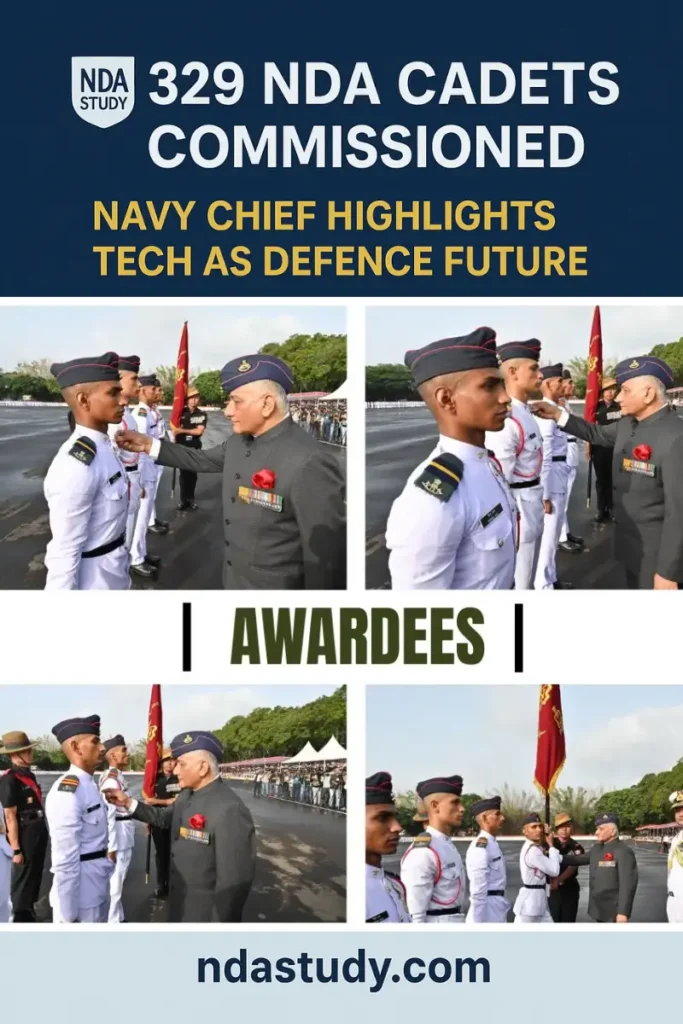
The National Defence Academy Passing Out Parade (POP) stands as one of India’s most significant military traditions, marking the formal commissioning of the nation’s future defence leaders. The 149th Course POP, held on 30 November 2025, showcased 329 cadets being formally inducted into the Indian Army, Navy, and Air Force after completing three years of intensive tri-service training. This ceremonial event, witnessed by thousands of families and military enthusiasts, represents a watershed moment when civilian trainees transform into commissioned officers ready to safeguard the nation.
The event commenced at 06:30 AM, a deliberate timing to avoid heat while allowing maximum attendance and optimal live-streaming broadcast. Navy Chief Admiral Dinesh K. Tripathi reviewed the parade, emphasising that technology will be the armed forces’ greatest asset as India positions itself as a future global power. His remarks resonated with contemporary military strategy, highlighting how modern-day defence forces must adapt to technological advancement while maintaining the core values of discipline, honour, and integrity that have defined military service for generations.
What Happens During an NDA Passing Out Parade
The Passing Out Parade follows a meticulously choreographed format that blends ceremonial grandeur with military precision. The event features immaculate drill movements performed by cadets in perfect synchronisation, with each marching column representing different squadrons and arms of service. The parade ground transforms into a spectacular display of unified motion, discipline, and jointmanship—the hallmark principle of NDA training where cadets from the Army, Navy, and Air Force train together as one cohesive unit. The synchronized marching, combined with military bands and ceremonial formations, creates an atmosphere of national pride and reverence for military service.
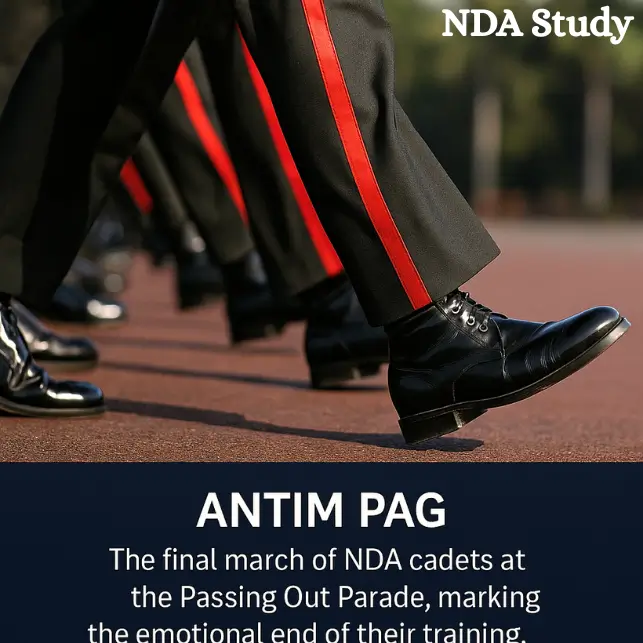
One of the most emotionally resonant moments occurs during the “Antim Pag” or final step, when cadets march out of the National Defence Academy for the last time as trainees. This poignant tradition symbolises their transition from cadets to commissioned officers, and the moment often draws thunderous applause and visible emotion from families and attendees. The ceremony concludes with award presentations, regimental colours hoisting, and sometimes a spectacular flypast featuring fighter aircraft and helicopters, adding an emphatic finale to the proceedings.
Understanding NDA Training and Its Three-Year Journey
Cadets entering the National Defence Academy undergo one of the world’s most demanding military training programmes. The three-year curriculum balances rigorous academics, physical conditioning, leadership development, and service-specific military training. Cadets study subjects ranging from defence science and military history to advanced mathematics and strategic studies, preparing them for officer-level responsibilities across multiple domains. The physical training component includes endurance exercises, combat drills, swimming, mountaineering, and various sports designed to build resilience, teamwork, and tactical awareness.
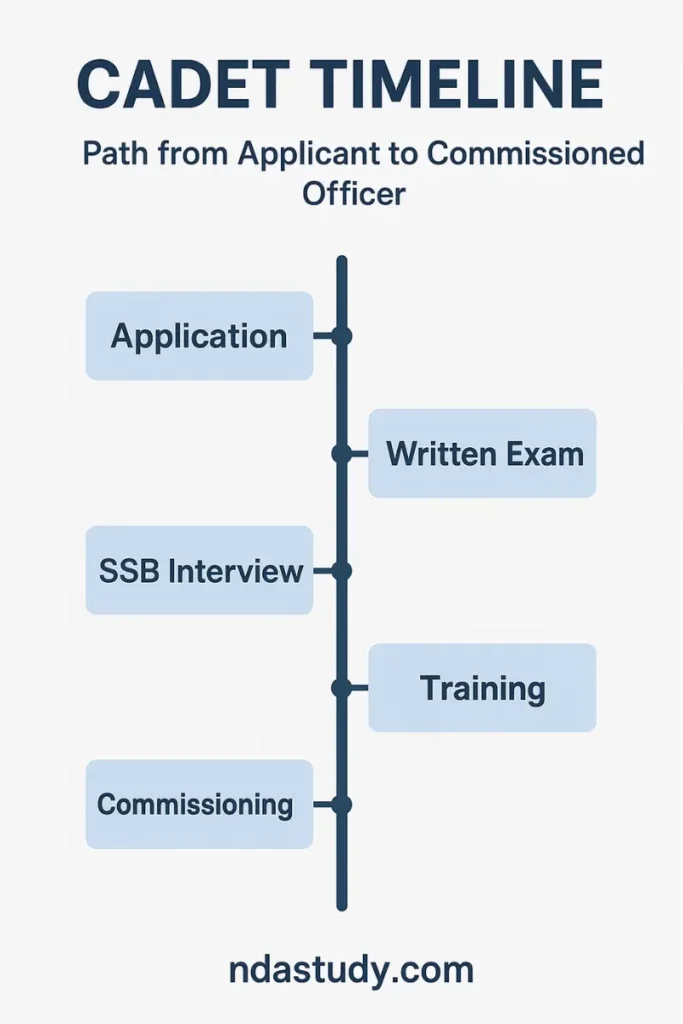
The 149th Course Convocation revealed that 328 cadets earned Jawaharlal Nehru University degrees, with specialisations across Science, Computer Science, and Arts streams. Notably, 112 cadets from Navy and Air Force B.Tech programmes received course completion certificates and will earn full degrees after completing one additional year at their respective pre-commissioning academies—the Indian Naval Academy in Ezhimala and the Air Force Academy in Hyderabad. This dual-track system ensures that technical specialists receive advanced engineering and specialised training beyond the basic NDA curriculum.
Excellence Recognition and Medal Ceremonies
The 149th Course POP highlighted academic and leadership excellence through prestigious awards. Cadet Deepak Kandpal received the President’s Gold Medal, the academy’s highest honour recognising outstanding performance across academics, physical fitness, and character. Cadet Siddharth Singh, commanding the entire parade with exceptional military bearing, earned the Silver Medal. Cadet Siddhi Jain secured the Bronze Medal, completing the podium of top-performing cadets.
Additionally, Golf Squadron received the Chief of Staff Banner, recognising exceptional collective performance and teamwork among its cadets. These medals serve not merely as trophies but as symbols of the rigorous standards maintained at NDA and the exceptional calibre of officers being commissioned.
Must Read List:
What Happened at Ajeya Warrior 2025? India-UK Joint Exercise Ends
India’s Hypersonic Missile Test 2025: December NOTAM Signals Major Strategic Shift
Academic stream leaders included Cadet Kartik Maheshwari from M Squadron (Science Stream) with FGPA 8.11, Cadet Ananya from G Squadron (Computer Science) with FGPA 8.36, Cadet Anurag Gupta from B Squadron (Social Science) with FGPA 7.44, and Cadet Vishwesh Bhalerao from F Squadron (B.Tech) with CGPA 8.05. Each achieved recognition through the Commandant’s Silver Medal and respective service-specific rolling trophies—the COAS (Chief of Army Staff), Admiral’s, CAS (Chief of Air Staff), and CIS (Chief of Integrated Staff) trophies, underscoring the multi-service nature of NDA’s excellence framework.
Global Representation and Defence Partnerships
The 149th Course Passing Out Parade underscored India’s expanding defence partnerships through the commissioning of 18 cadets from friendly foreign nations. These international cadets trained alongside their Indian counterparts, receiving identical rigorous preparation and earning full degrees from JNU.
This inclusion reflects India’s growing role as a regional security provider and its commitment to strengthening ties with allied nations through shared military training and defence cooperation. The presence of foreign cadets at the POP symbolises India’s defence diplomacy and its contribution to regional stability through knowledge transfer and officer development for partner nations.
Historic Milestones: Women Cadets at NDA
While the 149th Course maintained NDA’s traditional composition, recent history has added transformative chapters to the institution’s legacy. In May 2025, the 148th Course witnessed the passing out of 17 female cadets, the first-ever batch of women commissioned as officers from the National Defence Academy. This milestone came after the Supreme Court’s 2021 directive enabling women’s admission to NDA, fundamentally altering the institution’s composition and symbolising gender inclusion in India’s armed forces.
The inaugural batch of women cadets proved their mettle through identical training, performance standards, and military discipline, paving the way for expanded women’s participation in future courses. Notably, Cadet Shriti Daksh topped the Arts stream among the first female batch, becoming the first woman to achieve this distinction at NDA—a remarkable achievement highlighting women’s capabilities in competitive military excellence.
The Venue: Khetarpal Parade Ground’s Historical Significance
The Passing Out Parade takes place at Khetarpal Parade Ground, situated within the NDA campus at Khadakwasla, Pune. This historic venue bears the name of Second Lieutenant Arun Khetarpal, a Param Vir Chakra (PVC) recipient whose extraordinary valour during the 1971 Indo-Pakistani War exemplifies the sacrifice and courage expected of military officers. Nestled against the Sahyadri Hills, the parade ground provides a scenic backdrop that enhances the ceremony’s dignity and solemnity. The location’s connection to military excellence and sacrifice reinforces the values cadets are expected to embody throughout their service careers—courage, selflessness, and unwavering commitment to national defence.
Live Streaming and National Participation
The NDA Passing Out Parade of the 149th Course was broadcast live on YouTube from 06:30 AM, enabling millions of Indians and defence enthusiasts worldwide to witness the ceremony in real-time. This digital accessibility democratises participation, allowing families unable to attend in person, defence aspirants seeking inspiration, and military enthusiasts to experience this prestigious event.
The live-streaming initiative has become standard practice for NDA POPs, transforming what was once an exclusive gathering into a national celebration accessible to anyone with internet connectivity. News channels and defence education platforms provide comprehensive coverage, commentary, and highlight reels, ensuring the parade’s cultural and institutional significance reaches broader audiences.
Admiral Dinesh K. Tripathi’s Address: Technology and Strategic Vision
Navy Chief Admiral Dinesh K. Tripathi’s remarks as Reviewing Officer underscored contemporary military thinking, particularly regarding technology’s role in future defence operations. He articulated that technology represents the armed forces’ greatest asset, a statement reflecting India’s modernisation agenda and technological integration across military platforms. His address connected individual cadets’ training to larger national objectives, particularly India’s trajectory toward becoming a global power and safeguarding maritime interests in an increasingly complex geopolitical landscape. This messaging aligns with India’s defence strategy emphasising sea power, cybersecurity, artificial intelligence, and advanced surveillance systems—all requiring technically skilled, strategically aware military officers like the 149th Course graduates.
Understanding NDA’s Role in India’s Defence Apparatus
The National Defence Academy functions as India’s premier tri-services institution, producing approximately 1,300–1,400 commissioned officers annually across multiple courses. Since its establishment in 1954, NDA has graduated countless military leaders who have distinguished themselves through operational excellence, strategic thinking, and demonstrated courage in various military operations. The academy’s three-year curriculum intentionally combines all three services—Army, Navy, Air Force—to foster jointmanship and inter-service cooperation, addressing the complex security environment requiring coordinated military responses. This tri-service training model distinguishes NDA from single-service academies, reinforcing why NDA-commissioned officers carry exceptional value across India’s defence institutions.
Post-Passing Out Career Trajectory
Following the Passing Out Parade, Army officers move to the Indian Military Academy (IMA) in Dehradun for pre-commissioning specialised training, Naval officers proceed to the Indian Naval Academy (INA) in Ezhimala, Kerala, and Air Force officers join the Air Force Academy (AFA) in Hyderabad. These specialised academies provide service-specific training, aviation training for Air Force cadets, naval operations for Naval officers, and advanced tactical training for Army officers. The pre-commissioning phase typically lasts six months to one year, after which these officers assume their first postings and begin operational military careers across various commands and defence establishments throughout India and internationally.
Why NDA Passing Out Parade Matters to Defence Aspirants
For individuals aspiring toward NDA entry through the National Defence Academy Entrance Examination (NDAEE), the Passing Out Parade serves as both inspiration and practical benchmark. Watching the ceremony provides tangible evidence of NDA’s training output, the calibre of officers produced, the rigorous standards maintained, and the competitive environment awaiting successful candidates.
The parade demonstrates jointmanship principles through perfectly synchronised Army, Navy, and Air Force contingents; showcases physical excellence reflected in cadets’ bearing and precision drill; and highlights academic achievement through award recognitions. Defence aspirants often cite witnessing or studying NDA POPs as motivational touchstones during SSB (Services Selection Board) interview preparation and subsequent training.
FAQs | NDA Passing Out Parade 2025
1. What exactly is an NDA Passing Out Parade?
An NDA Passing Out Parade (POP) is a formal military ceremony marking the culmination of three years of intensive tri-service training at India’s National Defence Academy. During this ceremonial event, approximately 300-350 cadets are formally commissioned as officers into the Indian Army, Navy, or Air Force.
The parade showcases rigorous military drill, synchronized formations, and formal award presentations, symbolizing the transition from cadet status to commissioned officer rank. It’s held annually at Khetarpal Parade Ground in Khadakwasla, Pune, typically in May and November, and is considered one of India’s most significant military traditions.
2. How long is NDA training before the Passing Out Parade?
NDA training lasts exactly three years before cadets participate in the Passing Out Parade. During this period, cadets undergo rigorous tri-service training combining academic education, physical conditioning, military discipline, and leadership development.
They study subjects ranging from defence science and military history to advanced mathematics while participating in combat drills, mountaineering, swimming, and various sports. By the end of three years, cadets have completed approximately 450+ academic, physical, and military training modules, preparing them for officer-level responsibilities across multiple defence domains.
3. What happens during an NDA Passing Out Parade ceremony?
An NDA Passing Out Parade follows a meticulously choreographed format consisting of five main phases. First, cadets perform immaculate drill movements with synchronized marching, showcasing military precision and jointmanship. Second, the reviewing officer (typically a high-ranking military official or government dignitary) formally inspects the cadets.
Third, prestigious medals are awarded to top-performing cadets including the President’s Gold Medal, Silver Medal, and Bronze Medal. Fourth, the reviewing officer delivers a keynote address emphasizing military values and national defence priorities. Finally, cadets perform “Antim Pag,” their final ceremonial march as trainees, symbolizing transition to officer status, often concluding with a military flypast featuring aircraft and helicopters.
4. Where does the NDA Passing Out Parade take place?
The NDA Passing Out Parade takes place at Khetarpal Parade Ground, located within the National Defence Academy campus at Khadakwasla, Pune. This historic venue sits at the foothills of the Sahyadri Mountains, providing a scenic backdrop for the ceremony.
The parade ground is named after Second Lieutenant Arun Khetarpal, a Param Vir Chakra (PVC) recipient who demonstrated extraordinary valour during India’s 1971 war. This location symbolizes military excellence and sacrifice, reinforcing the values cadets are expected to embody throughout their defence careers.
5. What medals and awards are given at NDA Passing Out Parade?
The NDA Passing Out Parade features a comprehensive awards system recognizing excellence across multiple categories. The President’s Gold Medal is the highest honour, awarded to the cadet with the best overall performance in academics, physical fitness, and character. The Silver Medal goes to the second-best performing cadet, while the Bronze Medal recognizes the third-best.
Additionally, the Chief of Staff Banner is awarded to the top-performing squadron among all cadet units. Stream-specific awards include the Commandant’s Silver Medal and service-specific trophies—the Chief of Army Staff (COAS) Trophy for Army cadets, Admiral’s Trophy for Navy cadets, and Chief of Air Staff (CAS) Trophy for Air Force cadets. Academic toppers in Science, Computer Science, Arts, and B.Tech programs receive departmental rolling trophies.
6. How many cadets are commissioned at each NDA Passing Out Parade?
Typically, 300-350 cadets are commissioned at each NDA Passing Out Parade, making it annually India’s largest military commissioning event. The 149th Course, for example, commissioned 329 cadets into the Indian Armed Forces. Among these, approximately 70% join the Indian Army, while the remaining 30% split between the Navy and Air Force. Additionally, 18 cadets from friendly foreign nations receive commissioning and degrees from Jawaharlal Nehru University, reinforcing India’s defence partnerships with allied nations globally.
7. Can women attend NDA and participate in the Passing Out Parade?
Yes, women can now attend NDA and participate in Passing Out Parades following the Supreme Court’s 2021 directive enabling women’s admission. This historic decision culminated in 2025 with the first-ever batch of 17 female cadets successfully completing NDA training and participating in the 148th Course Passing Out Parade in May 2025. These pioneering women received identical training, faced identical performance standards, and earned full degrees from Jawaharlal Nehru University. Notably, Cadet Shriti Daksh topped the Arts stream, becoming the first woman to achieve this distinction at NDA—a remarkable achievement highlighting women’s exceptional capabilities in competitive military excellence and proving that gender inclusion strengthens India’s officer corps.
8. How can I watch the NDA Passing Out Parade ceremony?
The NDA Passing Out Parade is broadcast live on YouTube, enabling millions of Indians and defence enthusiasts worldwide to witness the ceremony in real-time. News channels including Doordarshan, India Today, and other defence-focused media provide comprehensive live coverage. Defence education platforms and military channels stream the full ceremony with expert commentary.
Additionally, the NDA official website and Defence Ministry platforms post highlights and complete recordings shortly after the event. This digital accessibility democratizes participation, allowing families unable to attend in person, defence aspirants seeking inspiration, and military enthusiasts to experience this prestigious event. You can search “NDA Passing Out Parade Live” on YouTube to find the latest broadcast of each course commissioning.
9. What happens to cadets after the Passing Out Parade?
After the Passing Out Parade, cadets transition to service-specific pre-commissioning academies for specialized training. Army officers proceed to the Indian Military Academy (IMA) in Dehradun for six months to one year of advanced tactical training. Naval officers move to the Indian Naval Academy (INA) in Ezhimala, Kerala, for specialised naval operations training.
Air Force officers join the Air Force Academy (AFA) in Hyderabad for aviation-specific and advanced military training. Navy and Air Force cadets pursuing B.Tech programs complete their final year at these specialized academies while earning their engineering degrees. Following pre-commissioning training, officers assume their first postings in various military commands across India and internationally, beginning their operational defence careers.
10. Why is the NDA Passing Out Parade significant for Indian Defence?
The NDA Passing Out Parade holds immense significance for India’s defence apparatus as it annually commissions approximately 1,300-1,400 officers across multiple courses who become key contributors to national security. These officers, trained in jointmanship and tri-service cooperation, are equipped to address complex contemporary security challenges in an increasingly complex geopolitical environment. The ceremony symbolizes India’s commitment to military excellence, disciplined leadership, and constitutional values of service and sacrifice.
For defence aspirants, witnessing the parade provides inspiration and practical benchmarks regarding training rigour, performance standards, and competitive environment. Additionally, the inclusion of female cadets and foreign officers underscores India’s progressive defence policies and its role as a regional security provider. The parade ultimately represents India’s march toward maintaining military preparedness, technological adaptation, and human resource development essential for safeguarding the nation’s territorial integrity and strategic interests.
11. What is “Antim Pag” in the NDA Passing Out Parade?
“Antim Pag” literally means “final step” in Hindi, and it’s one of the most emotionally resonant traditions during the NDA Passing Out Parade. This ceremony occurs when cadets march out of the National Defence Academy grounds for the final time as trainees. The “Antim Pag” symbolizes their formal transition from cadet status to commissioned officer rank.
As cadets perform this ceremonial march, often leaving friends and mentors behind, the moment frequently draws thunderous applause, visible emotion, and strong reactions from families and attendees. The tradition encapsulates the bittersweet nature of military graduation—pride in achievement coupled with nostalgia for academy years. For defence aspirants, understanding and witnessing Antim Pag reinforces the emotional and professional significance of military service commitment.
12. How does NDA training prepare cadets for officer responsibilities?
NDA’s three-year training combines rigorous academics, physical conditioning, character development, and military-specific instruction to prepare cadets for officer-level responsibilities. The academic curriculum includes defence science, military history, strategic studies, mathematics, physics, and humanities—providing intellectual foundation for leadership decisions. Physical training builds endurance, resilience, and tactical awareness through combat drills, mountaineering, swimming, and competitive sports. Character development emphasizes values like honour, integrity, loyalty, and service-before-self through case studies, mentorship, and practical leadership scenarios. Military-specific training includes drill, weapon handling, tactics, and fieldcraft unique to each service. The tri-service environment ensures cadets develop jointmanship and inter-service cooperation essential for modern defence operations. By graduation, cadets have developed not only technical military knowledge but also ethical and leadership competencies required to command troops, make tactical decisions under pressure, and uphold constitutional values.
13. What is the history and significance of Khetarpal Parade Ground?
Khetarpal Parade Ground, situated within NDA Khadakwasla, Pune, is named after Second Lieutenant Arun Khetarpal, a legendary Param Vir Chakra (PVC) recipient—India’s highest military decoration for valour. Khetarpal demonstrated extraordinary courage during the 1971 Indo-Pakistani War at the Battle of Basantar, personally leading troops despite being mortally wounded, ultimately sacrificing his life for the nation.
The parade ground’s naming honors his indomitable courage and spirit of sacrifice, embodying values every NDA cadet is expected to uphold. Located at the foothills of the Sahyadri Mountain range, the venue provides a majestic backdrop emphasizing the solemnity and dignity of military commissioning. The historical connection reinforces why cadets marching at Khetarpal Parade Ground are stepping into a legacy of service, sacrifice, and national duty—transforming civilians into officers dedicated to constitutional protection and national integrity.
14. How many times per year is the NDA Passing Out Parade held?
The NDA Passing Out Parade is held twice annually—typically in May and November—corresponding to the completion of Spring and Autumn courses. Each parade commissions approximately 300-350 cadets across the three services. This semi-annual commissioning schedule ensures continuous replenishment of India’s officer corps, with roughly 1,300-1,400 officers commissioned annually across multiple NDA courses.
The May ceremony typically occurs during late May, while the November parade happens in late November. This regular schedule is coordinated with the academic calendar and training progression, ensuring systematic development of military leadership across all service branches.
15. What is the difference between NDA Convocation and Passing Out Parade?
The Convocation Ceremony and Passing Out Parade are two distinct but complementary events. The Convocation Ceremony occurs first, typically the day before the Passing Out Parade, and is an academic event where cadets are formally conferred degrees from Jawaharlal Nehru University. During Convocation, academic excellence is recognized through departmental awards, toppers are felicitated, and families witness their wards’ educational achievement.
The Passing Out Parade, held the following day, is the military commissioning ceremony where cadets are formally inducted into the armed forces through ceremonial drill, military awards, oath-taking, and the “Antim Pag” tradition. Together, these events symbolize the dual transition—from student to graduate (Convocation) and from cadet to commissioned officer (POP)—representing the holistic development emphasized at NDA combining rigorous academics with military excellence.
16. How can NDA Passing Out Parade inspire defence aspirants?
The NDA Passing Out Parade serves as powerful inspiration for defence aspirants in multiple ways. Witnessing the ceremony provides tangible evidence of NDA’s training output, the calibre of officers produced, and the rigorous standards maintained. Cadets’ synchronized drill movements demonstrate physical excellence and discipline required for military service. Award ceremonies showcase the competitive excellence environment, motivating aspirants to set high performance benchmarks.
The inclusion of female cadets since 2025 expands representation and inspiration for women considering military careers. Stories of individual cadets achieving top academic and physical honours provide role models demonstrating excellence is attainable through dedication. For SSB (Services Selection Board) interview candidates, studying Passing Out Parade ceremonies provides insights into military values, officer expectations, and service ethos. Additionally, the ceremony’s formal structure, ceremonial traditions, and emphasis on jointmanship communicate the institution’s commitment to producing world-class military leaders prepared for contemporary defence challenges.
17. What roles do reviewing officers play in NDA Passing Out Parade?
The Reviewing Officer, typically a high-ranking military official such as the Navy Chief, Army Commander, or Air Chief Marshal, plays a ceremonial and symbolic leadership role during the Passing Out Parade. The Reviewing Officer formally inspects the parade, evaluating cadets’ military bearing, drill precision, and overall readiness. They address the cadets with motivational remarks emphasizing military values, national defence priorities, and contemporary strategic challenges. The Reviewing Officer presents prestigious medals and awards to outstanding cadets, personally recognizing excellence.
By presiding over the ceremony, the Reviewing Officer links the graduating cadets to the operational military establishment, symbolizing their acceptance into the armed forces hierarchy. Their presence, remarks, and actions underline that these cadets are now recognized as commissioned officers worthy of senior military leadership’s respect and confidence.
18. How has female cadet inclusion changed NDA Passing Out Parade traditions?
Female cadet inclusion beginning with the 148th Course in 2025 has enriched NDA Passing Out Parade traditions while maintaining their ceremonial essence. The first batch of 17 female cadets marched with equal precision, wore identical uniforms, and competed under identical performance standards as male counterparts. Their presence diversified the marching contingents, adding visual representation of gender inclusion in India’s defence forces. Female cadets received identical medal recognition—Cadet Siddhi Jain earned Bronze Medal, while Cadet Shriti Daksh topped the Arts stream, becoming the first woman to achieve this distinction.
This inclusion symbolizes modernization of military traditions to reflect constitutional values of equality while maintaining rigorous excellence standards. The historic achievement motivates future generations of women to pursue military careers, gradually increasing female representation in subsequent courses and transforming the institutional culture toward greater inclusivity without compromising military discipline or operational standards.
19. What foreign nations send cadets to NDA?
The NDA admits cadets from various friendly nations allied with India, typically 15-20 international cadets per course. These foreign cadets receive identical training, face identical performance standards, and earn full Jawaharlal Nehru University degrees alongside Indian counterparts. Nations regularly sending cadets include Nepal, Bhutan, Mauritius, Bangladesh, and several African and South Asian allied nations.
During the 149th Course Passing Out Parade, 18 foreign cadets were commissioned, reinforcing India’s role as a regional security provider and defence partner. International cadet inclusion demonstrates India’s commitment to defence cooperation, knowledge transfer, and strengthening ties with allied nations through shared military training. Foreign officers trained at NDA become ambassadors of Indian military professionalism in their home countries, enhancing defence diplomacy and regional security cooperation.
20. How does NDA Passing Out Parade connect to India’s defence strategy?
The NDA Passing Out Parade represents the practical manifestation of India’s long-term defence strategy emphasizing officer development, jointmanship, technological adaptation, and strategic readiness. The tri-service training environment at NDA ensures graduating officers understand multi-service operations essential for contemporary defence challenges. The emphasis on technology, as highlighted by Navy Chief Admiral Tripathi during the 149th Course POP, aligns with India’s defence modernization agenda incorporating artificial intelligence, cybersecurity, advanced surveillance, and digital warfare capabilities.
Female cadet inclusion supports India’s strategic emphasis on utilizing its complete human resource potential for strengthened defence. The commissioning of foreign officers reinforces India’s strategic positioning as a regional security provider and alliance builder. Post-commissioning careers of these officers contribute directly to military operations, defence planning, and national security execution. Thus, the Passing Out Parade is not merely ceremonial but represents India’s systematic investment in developing military leadership capable of safeguarding national interests in an increasingly complex geopolitical environment.
The Convocation Ceremony Context: Academic Rigour Alongside Military Training
The 149th Course Convocation Ceremony, held at Habibullah Hall the day before the Passing Out Parade, underscores NDA’s commitment to holistic education. With UPSC Chairman Dr. Ajay Kumar as Chief Guest, the ceremony formally conferred Jawaharlal Nehru University degrees on 328 cadets, recognised academic excellence through departmental awards, and acknowledged the role of families in supporting cadets through three years of demanding training.
This ceremonial sequencing—Convocation followed by Passing Out Parade—symbolises the transition from student-cadet to commissioned officer, with academic credentials providing intellectual foundation and military ceremony confirming operational readiness.
The National Defence Academy’s Passing Out Parade remains India’s most significant annual military ceremony, blending tradition with contemporary strategic relevance while inspiring future generations to pursue military service with honour and distinction.
![Bharat Forge Develops Fully Indigenous Naval Propulsion System for Indian Navy [Explained]](https://ndastudy.com/wp-content/uploads/2026/01/Bharat-Forge-Develops-Fully-Indigenous-Naval-Propulsion-System-for-Indian-Navy-300x169.webp "Bharat Forge Develops Fully Indigenous Naval Propulsion System for Indian Navy [Explained] 5")