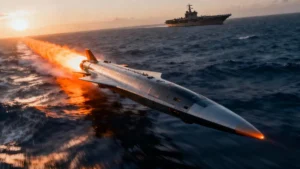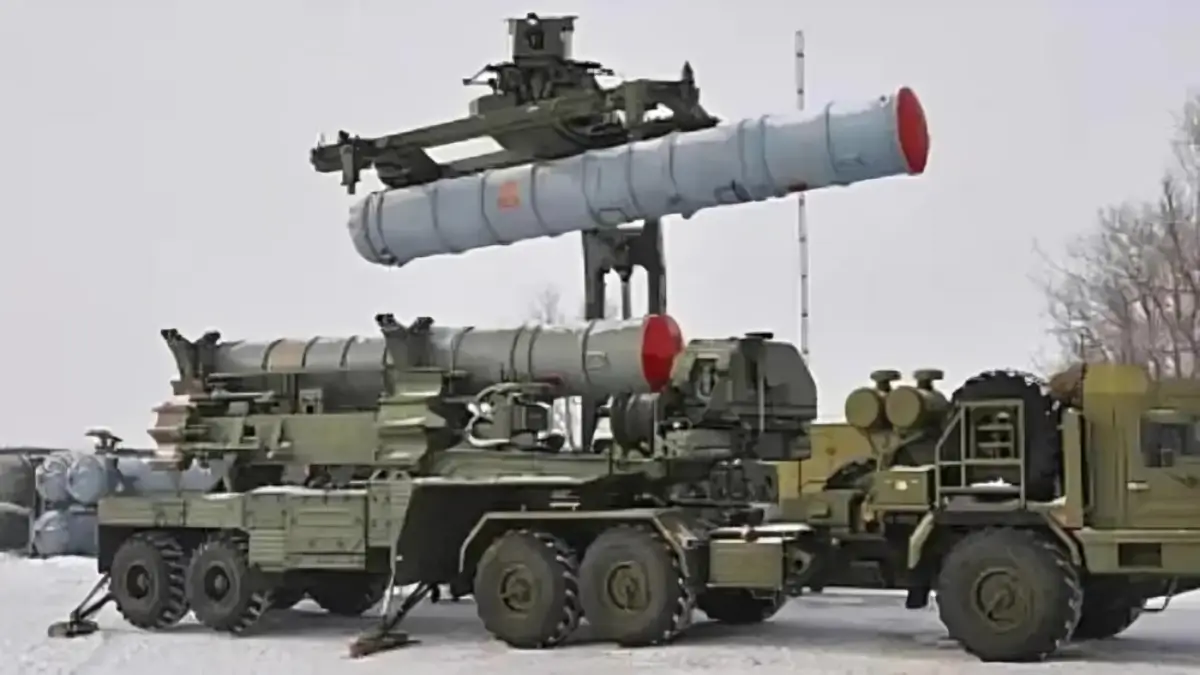
Russian President Vladimir Putin is set to arrive in New Delhi on December 4–5, 2025, marking a historic summit with India focused on advanced defence cooperation. The centrepiece? A groundbreaking ₹10,000 crore new S-400 missile deal and discussions around acquiring more squadrons that could reshape India’s air defence strategy. For NDA 2025 current affairs, this is a must-know story that will likely appear in your written exam, SSB interview, and definitely in Google Discover feeds across India.
What Exactly Happened? The Breaking News
Russian President Vladimir Putin is visiting India on December 4–5, 2025 for the 23rd Annual Summit – his first visit since the Russia-Ukraine war began. Defence cooperation and the S-400 air defence system will be the top agenda item, signalling Russia’s commitment to maintaining India as a strategic partner despite global pressures.
India is clearing a ₹10,000 crore deal for 275–300 additional S-400 missiles to bolster its existing three systems already operational along India’s northern and western borders. This comes on top of India’s original 2018 order of 5 S-400 regiments for ₹35,000 crore; 3 have been delivered, and 2 more are due by 2026–27. Beyond this immediate purchase, Russia is also proposing 2–3 additional S-400 regiments under discussion (a separate multi-billion dollar deal, not yet finalized) that could add another 50–60 missile systems to India’s arsenal.
What makes this deal particularly significant is Russia’s unprecedented offer: up to 50% technology transfer for S-400 missiles and supporting systems. This means Bharat Dynamics Limited (BDL) in India can begin local assembly and production of advanced missile components, marking India’s shift from a pure buyer to a co-producer of cutting-edge defence systems. Additionally, an Maintenance, Repair, Overhaul (MRO) facility at BDL’s Hyderabad base is under discussion, further boosting India’s self-reliance in defence manufacturing.
The timing of this mega-announcement, just before Putin’s visit, sends a clear geopolitical message: Russia values its India relationship and is willing to share advanced military technology and know-how despite the West’s pressure. For NDA aspirants, this encapsulates the complex India–Russia–USA–China strategic triangle that often appears in exam questions.
Why This S-400 Deal Is MASSIVE for India’s Defence
The proposed deal to acquire 275 to 300 additional S-400 interceptor missiles for over ₹10,000 Crore is not a routine procurement; it is a strategic imperative that directly impacts India’s ability to maintain high-readiness deterrence against its primary threats.
Here are the key reasons why this transaction is massive for India’s defence strategy:
What Is S-400 Sudarshan Chakra?
The S-400 air defence system, known in India as “Sudarshan Chakra” (the wheel of protection – a symbol from Hindu mythology reflecting power and precision), is one of the world’s most advanced long-range air defence systems. Developed by Russia’s Almaz-Antey company, it entered Russian military service in 2007 and has since become the gold standard for multi-layered air defence globally.
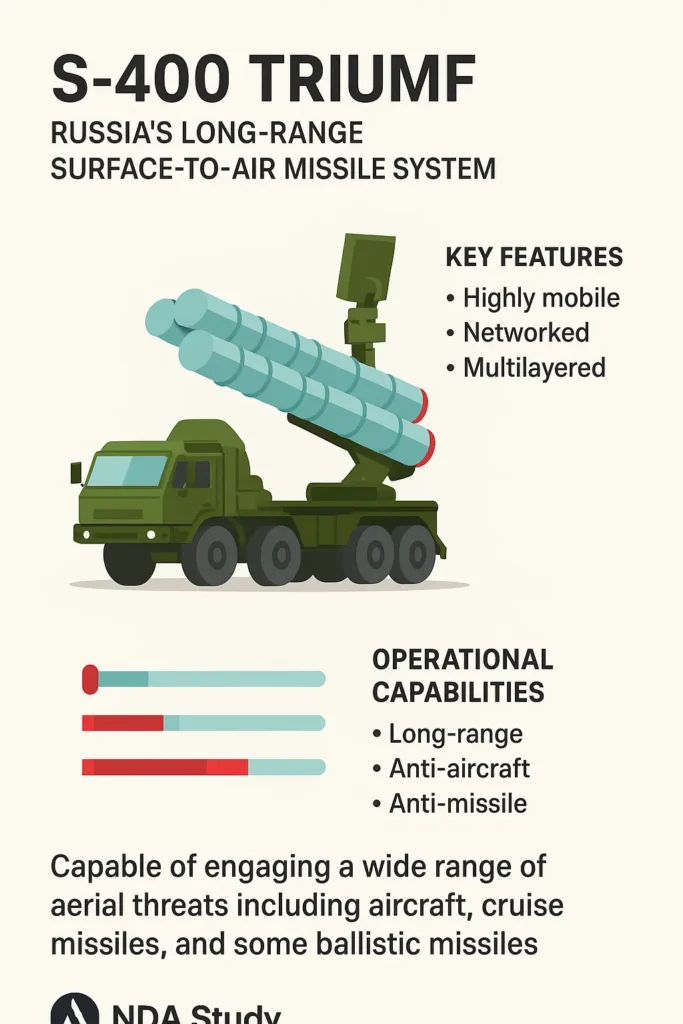
The naming reflects India’s strategic approach: while acquiring Russian hardware, India contextualizes it within its own cultural and strategic identity, symbolizing that these weapons are tools of Indian defence and sovereignty.
Key Specs Every NDA Aspirant Should Know
Understanding the S-400’s technical capabilities is critical because the NDA exam often tests your knowledge of India’s defence assets:
Quick One-Page Reference Table
| Aspect | Details (For NDA 2025) |
|---|---|
| System Name (NATO/Russian/Indian) | NATO: SA-21; Russian: S-400 Triumf; Indian: Sudarshan Chakra |
| Developer | Almaz-Antey, Russia; Service entry: 2007 |
| India’s 2018 Deal | ₹35,000 crore for 5 regiments; 3 delivered, 2 due 2026–27 |
| New Deal (Dec 2025) | ₹10,000 crore for 275–300 additional missiles |
| Detection Range | 600 km |
| Engagement Range | Up to 400 km (depending on target) |
| Multi-Target Capacity | 80 simultaneous tracks |
| Response Time | Seconds from detection to launch; 5 min to operational |
| Operation Sindoor Achievement | Shot down Pakistani aircraft at 314 km (record) |
| Technology Transfer Offer | 50% local assembly + co-production via Bharat Dynamics Limited |
| MRO Facility | Planned at BDL Hyderabad |
| Strategic Purpose | Part of Mission Sudarshan Chakra (integrated air defence by 2035) |
| India’s Ultimate Goal | 10 S-400 systems across nation for nationwide coverage |
| NDA Exam Relevance | Written GS (MCQ + short answer), Essay, SSB current affairs |
- Detection range: Up to 600 kilometres – meaning it can spot enemy aircraft, missiles, and UAVs from extreme distances.
- Engagement range: Depends on the target type, reaching approximately 400 kilometres for some missile variants.
- Multi-target capability: Can simultaneously track and engage 80 aerial targets – a massive capability that allows a single S-400 battery to protect an entire region.
- Response time: Can go from detection to launch in mere seconds, giving it tactical superiority in surprise attack scenarios.
- Threat coverage: Handles fighter jets, ballistic missiles, cruise missiles, advanced UAVs, and even stealth aircraft – essentially the full spectrum of modern airborne threats.
- Mobility: Can relocate and be combat-ready in under 5 minutes, making it hard for enemy forces to target predictively.
Operation Sindoor: Proof of Concept
The real-world success of India’s S-400 came dramatically during Operation Sindoor in May 2024, India’s anti-terror operation against Pakistan’s militant infrastructure. This single operation became a game-changer in proving the system’s battlefield effectiveness:
- One S-400 unit achieved a kill at 314 kilometres – breaking existing engagement records and shocking global military observers. This unprecedented range engagement proved that India now possessed air defence capability that no neighbour could easily overcome.
- Total Pakistani aircraft neutralized: 7 in coordinated strikes, with S-400 providing air superiority and cover for other operations.
- Over 300 airborne targets tracked simultaneously, demonstrating the system’s ability to handle complex, multi-directional threats.
- Speed of deployment: The system went from standby to operational firing posture in under 5 minutes during live combat, validating Russia’s design philosophy.
For NDA aspirants, Operation Sindoor represents a watershed moment: it proved Indian defence modernization is working, boosted national confidence, and showed that high-tech weaponry can be effectively deployed by Indian forces. SSB interviewers love asking about such moments of national pride.
Why This Matters for India’s Strategic Autonomy
Deployed along India–Pakistan and India–China borders, the S-400 is now seen as a game-changing force multiplier that fundamentally shifts the regional military balance. India’s northern border with China is mountainous and challenging; a system like S-400 denies airspace superiority to any aggressor. Similarly, Pakistan’s air force capabilities, historically a concern for Indian defence planners, are significantly neutralized by S-400’s range and accuracy.
The S-400 is also central to Mission Sudarshan Chakra – India’s ambitious vision for a multi-layered, AI-networked, all-encompassing air defence shield by 2035. This mission integrates short-range systems like Akash missiles, medium-range systems, and long-range systems like S-400 into a unified command-and-control network. Future Indian air defence will be automated, AI-supported, and capable of autonomous decision-making during crises – a leap towards 21st-century defence readiness.
The New Deal Breakdown: ₹10,000 Crore + 275–300 Missiles
India and Russia have agreed on a new defense deal worth over ₹10,000 Crore (about $1.2 billion). This deal aims to quickly increase India’s supply of advanced missile interceptors.
The agreement focuses on purchasing 275 to 300 advanced missiles for India’s S-400 Triumf (Sudarshan Chakra) air defense systems. This purchase is important for keeping the S-400 batteries fully operational, as they are situated in key locations. The deal shows that Russia remains an important supplier for India’s air defense needs.
What India Is Buying Right Now
The immediate headline: India is purchasing 275–300 additional S-400 missiles for ₹10,000 crore (~$1.2 billion USD). These are supplementary missiles for the three S-400 systems India already has operational in critical defence zones. India’s original 2018 contract was for 5 complete S-400 regiments; with 3 delivered and 2 more arriving by 2026–27, this new missile purchase ensures those systems maintain adequate firepower and sustain operational readiness for years.
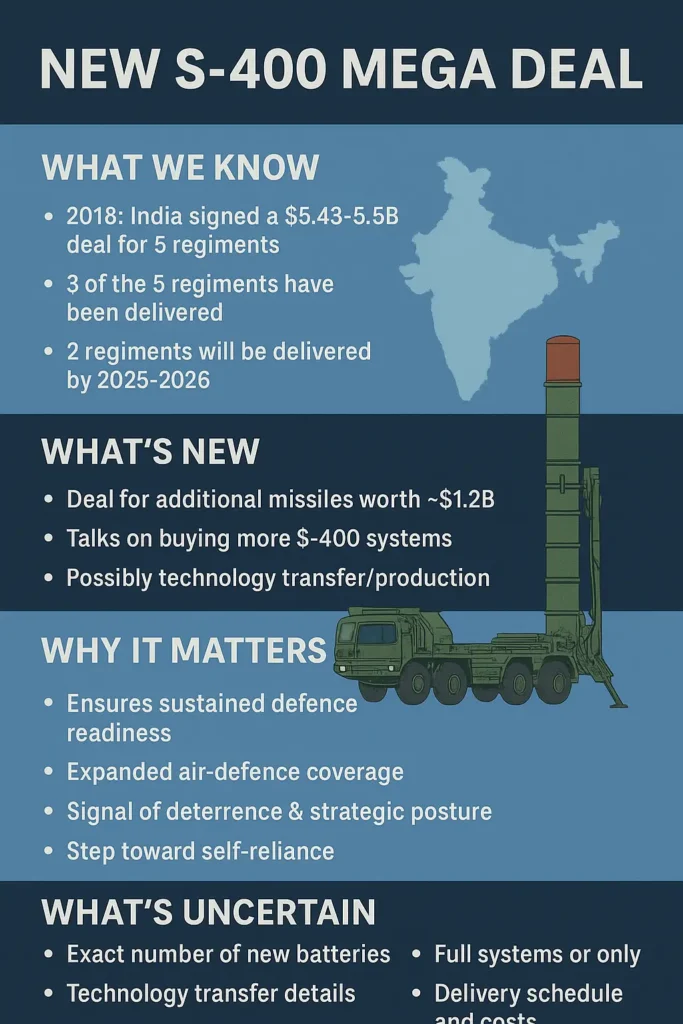
The ₹10,000 crore figure might sound like a massive sum, but in context: these missiles are among the most advanced air defence projectiles globally, with each system capable of engaging targets at extreme ranges. When amortized over 5–10 years of operational service, the cost-per-protected-hour is remarkably efficient.
The Bigger Multi-Billion Dollar Deal (The Game Changer)
Beyond the immediate missile purchase, Russia is pushing a more ambitious proposal: 2–3 additional S-400 regiments under active negotiation. This isn’t finalized yet – still in “cost consideration” and diplomatic discussion stages – but if approved, it would represent a multi-billion dollar investment (potentially $2–3 billion USD).
India’s ultimate goal is to acquire 10 S-400 systems total, deployed strategically across the nation:
- 3 along the India–Pakistan border (Punjab, Rajasthan) – covering potential Pakistani air incursions
- 1 each in Maharashtra and Gujarat (Western coast) – protecting maritime interests and potential airspace threats from the Arabian Sea
- 2 in the North-east – defending against threats from Myanmar, Bangladesh, and China’s Yunnan province
- 1 in Jammu & Kashmir – defending the sensitive Kashmiri airspace and northern borders
- 2 for training, maintenance, and repair reserves – ensuring constant operational readiness
This deployment strategy reflects India’s sophisticated understanding of its threat landscape. Rather than concentrating all systems in one region, India is spreading them to provide nationwide air defence coverage, a move that expert military analysts describe as textbook modern strategy.
Russia’s Game-Changer: 50% Technology Transfer
Here’s where the deal becomes truly transformative: Russia is offering up to 50% technology transfer for S-400 missiles and supporting systems. This isn’t just a hardware purchase; it’s a pathway to Indian technological self-reliance.
Bharat Dynamics Limited (BDL), India’s state-owned defence PSU, will now participate in local assembly and production of S-400 missiles. The complex 48N6 missile variant – the most advanced missile component – has already been approved for local production as of October 2025. This means Indian engineers, technicians, and scientists will gradually gain expertise in manufacturing the world’s most advanced air defence missiles on Indian soil.
The establishment of a Maintenance, Repair, Overhaul (MRO) facility at BDL’s Hyderabad headquarters is under discussion. This facility would not only service India’s existing S-400 systems but could also become a regional hub for MRO services for friendly nations, creating an additional revenue stream and boosting India’s defence manufacturing ecosystem.
Why this technology transfer is historic: It marks India’s transition from being a weapons importer to being a weapons co-producer and eventually exporter. Countries like France (Rafale jets), USA (F-16s), and Russia have been reluctant to share critical defence technologies; Russia’s willingness to do so with India underscores the depth of their strategic relationship and mutual trust built over decades.
India–Russia Defence Ties: Why Russia Matters (But Isn’t Everything)
The relationship between India and Russia, including the former Soviet Union, is a “Special and Privileged Strategic Partnership.” This partnership is based on many years of cooperation, especially in defense. It started during the Cold War when the Soviet Union became India’s main and most trusted supplier of advanced military equipment and technology. For further details let’s dive in:
Historical Tie + Current Dependency Context
India’s defence ties with Russia stretch back to the Cold War era. Even during India’s Non-Aligned Movement phase, India maintained a special relationship with the Soviet Union. Post-independence, when Western nations were hesitant to provide military equipment to India, Russia became the go-to partner.
Must Read Articles:
NDA Passing Out Parade 2025: Complete Guide to India’s Most Prestigious Military Ceremony
329 NDA Cadets Commissioned: Navy Chief Highlights Tech as Defence Future
Why IAF Bet ₹8000 Crore on BrahMos-NG Before First Flight Test
What Happened at Ajeya Warrior 2025? India-UK Joint Exercise Ends
India’s Hypersonic Missile Test 2025: December NOTAM Signals Major Strategic Shift
Today, 60–70% of India’s armed forces equipment is Russian-origin – fighter jets, helicopters, tanks, submarines, small arms, ammunition. This deep interoperability means Indian soldiers train on Russian hardware from day one, Russian maintenance protocols are embedded in Indian defence procedures, and spare parts supply chains are optimized for Russian systems.
This historical dependency, however, is shifting.
The Shift: Diversification Is Real and Strategic
According to the SIPRI 2025 arms trade report, Russia’s share of India’s defence imports has dropped dramatically from 76% in 2009 to 36% in 2024. This isn’t a decline in Russian imports per se; rather, India is actively diversifying its defence sourcing to reduce strategic vulnerability and maintain autonomy.
India now purchases significantly from:
- France: Rafale fighter jets (€7.8 billion deal), submarine technology, air-to-air missiles
- USA: Defence partnerships, missile systems, radar technology, potential F-16/F-18 deals under discussion
- Israel: Drone technology, air defence systems, precision-guided munitions
- Europe: Various platforms and sub-systems via European defence contractors
The reason: India’s “Aatmanirbhar Bharat” (self-reliant India) push aims to reduce dependence on any single foreign power. By diversifying suppliers, India ensures that no geopolitical crisis with one nation (even Russia) can cripple India’s defence apparatus. Additionally, competition between suppliers drives innovation and cost efficiency.
Joint Programmes That Remain Strong
Despite diversification, Russian-Indian joint programmes remain cornerstone defence assets:
- BrahMos cruise missile – co-developed with Russia, now becoming India’s premier precision strike weapon
- T-90 main battle tanks – hundreds in service with the Indian Army
- MiG-29 and Sukhoi fighter jets – the backbone of Indian Air Force operations
- Kamov helicopters – critical for naval operations
- Stealth frigates and other naval platforms – built with Russian technology transfer
- T-72 tanks and BMP-2 armoured vehicles – frontline equipment
- AK-203 assault rifle – new indigenous production with Russian design input
These are not legacy systems; they’re active, continuously upgraded, and critical to India’s military readiness. The S-400 addition to this portfolio simply deepens an already profound defence relationship.
Key Takeaway for NDA Aspirants
India–Russia is best understood as a "strategic partner" relationship, not a dependency. India is now selective and modern in its approach: it buys from Russia when the technology is best-in-class (like S-400), diversifies when other options are superior (like Rafales from France), and increasingly develops indigenous systems (Brahmos, Akash, Tejas fighter jet). This nuanced approach often appears in NDA essay questions framed as "India's Defence Strategy" or "India's Strategic Autonomy."
NDA Exam Angle: Possible Written + SSB Questions
Probable NDA GS MCQs (Civil Service Aspirant Level)
Question 1: “The S-400 air defence system in Indian service is known as:”
a) Akash
b) Sudarshan Chakra
c) Brahmos
d) Astra
Answer: b) Sudarshan Chakra
Question 2: “During Operation Sindoor in May 2024, an S-400 unit achieved a kill at a range of approximately:”
a) 150 km
b) 214 km
c) 314 km
d) 414 km
Answer: c) 314 km – a record engagement distance
Question 3: “Which Russian defence company manufactures the S-400 system?”
a) Gazprom
b) Almaz-Antey
c) Rostec
d) VSMPO-Avisma
Answer: b) Almaz-Antey
Question 4: “India’s 2018 S-400 procurement deal was valued at approximately:”
a) ₹25,000 crore
b) ₹35,000 crore
c) ₹45,000 crore
d) ₹55,000 crore
Answer: b) ₹35,000 crore (for 5 regiments)
Question 5: “According to SIPRI 2025, Russia’s share of India’s defence imports in 2024 stands at:”
a) 76%
b) 56%
c) 36%
d) 16%
Answer: c) 36% (down from 76% in 2009)
Question 6: “The S-400 system can simultaneously track and engage approximately _ aerial targets:”
a) 40
b) 60
c) 80
d) 100
Answer: c) 80 targets
Possible Short Answer / Written Exam Questions
Question 1: “Explain the significance of the S-400 system in India’s air defence strategy. How does the proposed 50% technology transfer accelerate India’s ‘Aatmanirbhar Bharat’ vision?”
Answer framework:
- S-400 is world’s most advanced long-range air defence system
- Provides 600 km detection range, 400 km engagement range
- Operation Sindoor proved its 314 km engagement capability
- 50% technology transfer allows Bharat Dynamics Limited to co-produce missiles locally
- Reduces strategic dependence on Russia, supports Make in India
- Establishes MRO facility at Hyderabad, creating indigenous expertise
- Transitions India from importer to co-producer of defence systems
Question 2: “Compare India’s defence import diversification with the persistent Russia–India strategic partnership. Is this contradiction or strategic necessity? Justify.”
Answer framework:
- Not contradiction; smart diversification strategy
- Russia’s share dropped from 76% (2009) to 36% (2024)
- India now buys from France (Rafales), USA, Israel, Europe
- Reason: Strategic autonomy – no single foreign power should cripple India’s defence
- Russia remains key for specific tech (S-400, BrahMos, submarines)
- Diversification ensures competition, cost efficiency, technological access
- Example: Rafale from France is superior in certain roles than MiG-29
- Conclusion: India maintains strategic partnerships while preserving strategic autonomy
Question 3: “What is Mission Sudarshan Chakra? How does it integrate the S-400 with India’s broader multi-layered defence architecture?”
Answer framework:
- Mission Sudarshan Chakra is India’s vision for integrated, AI-networked, multi-layered air defence by 2035
- Multi-layered approach: short-range (Akash), medium-range, long-range (S-400) systems in unified command
- S-400 handles high-altitude, long-range threats; Akash handles medium-range
- All systems networked via central command, enabling coordinated response
- AI integration allows autonomous decision-making during crises
- Reflects 21st-century defence doctrine: integrated systems > standalone platforms
Likely SSB Interview / GTO Questions
Question 1: “Do you support India buying more S-400 systems despite their high cost? Why or why not?”
Sample answer approach:
“Yes, I support it because: (1) The 314 km kill range during Operation Sindoor proves effectiveness; (2) With China’s military buildup on northern border, air defence capability is non-negotiable; (3) S-400 is world’s best system for this role – buying anything less would compromise security; (4) The 50% tech transfer makes it cost-effective in long term; (5) Every rupee spent on defence capability is an investment in national sovereignty. However, I’d also ensure that simultaneously, India accelerates indigenous system development so we’re not perpetually dependent on imports.”
Question 2: “Some argue India relies too heavily on Russian defence imports despite recent diversification. Is this a security risk? How should India balance partnerships?”
Sample answer approach:
“It’s a valid concern but the trend is improving. Historical dependence was due to lack of Western options; now India actively diversifies. However, complete independence isn’t realistic for a developing nation. Balance requires: (1) Maintain Russia ties (proven reliability, technology transfer); (2) Expand USA partnership (F-16/F-18 possibilities); (3) Develop indigenous capability (Brahmos, Tejas, Akash); (4) Buy from Israel/Europe for specific needs. The goal isn’t 100% independence but strategic autonomy – never being held hostage by any one supplier. S-400 + tech transfer exemplifies this approach: buying best system while gradually building local capability.”
Question 3: “If you were Defence Minister, would you prioritize more S-400 acquisitions or indigenous missile development like Brahmos and Astra? Justify.”
Sample answer approach:
“I’d pursue both simultaneously, not either-or. Reasoning: (1) S-400 fills an immediate strategic gap – China and Pakistan won’t wait for India to finish indigenous systems; (2) Brahmos and Astra are excellent but still maturing – they need 5–10 more years for full operational capability; (3) The S-400 + 50% tech transfer creates an indigenous capacity that benefits future systems; (4) Fiscal allocation: 60% to immediate systems like S-400, 40% to indigenous R&D pipeline. This ensures current security while building future self-reliance. A responsible Defence Minister balances immediate threats and long-term vision.”
Lecturette / GD Topics Likely to Emerge
“India’s Strategic Defence Partnerships: Russia, USA, France – Balancing Act for Strategic Autonomy”
“Self-Reliance in Defence: Technology Transfer as a Tool for Aatmanirbhar Bharat”
“Modern Warfare & Air Defence: India’s Multi-Layered Shield Strategy”
“Operation Sindoor: A Case Study of Defence Capability and Strategic Messaging”
“Indigenous vs. Imported: India’s Path to Military Modernization”
FAQs | New S-400 Mega Deal 2025
1. Is the S-400 deal important for NDA 2026 written exam?
Absolutely yes. This is cutting-edge current affairs with immediate geopolitical relevance to India’s defence and foreign policy. Expect 1–2 direct MCQs on facts (range, name, Operation Sindoor achievement, deal value). Additionally, General Studies might ask broader questions about India’s defence modernization or India–Russia ties – both pivot on S-400. The system represents a cornerstone of India’s strategic thinking, making it essential exam material.
2. How many questions can come from this topic in NDA exam?
Typically, 1–2 direct MCQs (factual recall), plus 1 indirect mention in essay/analysis-based GS sections where the question asks about “India’s defence strategy” or “India–Russia partnership.” SSB will definitely cover this in the current affairs round and will likely ask your opinion on India’s defence spending priorities, defence partnerships, or strategic choices. Make it 3–5 total points of contact across written + SSB.
3. How do I add this topic to my NDA notes quickly?
Create a 1-page format: (1) Title + Date (Dec 2025), (2) Key facts box (detection range 600 km, engagement range 400 km, Operation Sindoor 314 km kill, ₹10,000 crore deal), (3) One-liner on Operation Sindoor success, (4) Tech transfer angle (50% + Bharat Dynamics), (5) Mission Sudarshan Chakra connection (future integrated air defence). Draw a simple diagram showing S-400 deployment locations (borders, coast, northeast). This 1-pager takes 10 minutes but covers all critical points for recall under exam pressure.
4. Can this topic definitely be asked in SSB interview?
Yes, very likely. SSB loves current affairs topics with strategic depth. The S-400 deal is perfect because it tests three things: (1) Current awareness – do you follow defence news?; (2) Strategic thinking – can you explain why India bought it?; (3) Opinion formation – what’s your stance on defence spending? Prepare an answer along these lines: “India’s defence modernization requires balanced imports + domestic tech development – the S-400 deal shows this strategy because of the 50% tech transfer, allowing Bharat Dynamics Limited to eventually co-produce these missiles. This combines immediate security needs with long-term self-reliance goals.”
5. What’s the difference between S-400 and India’s indigenous Akash missile system?
Excellent question – it shows you’re thinking strategically. S-400 is Russian, long-range (600 km detection, 400 km engagement), advanced, and proven in combat (Operation Sindoor). Akash is Indian, shorter range (~25 km effective range), still maturing as a system, but developing rapidly. India uses both because they serve different roles: Akash handles lower-altitude threats near the border; S-400 handles high-altitude threats and aircraft at extreme distances. This “layered defence” approach – short-range + medium-range + long-range systems working together – is called “multi-layered air defence.” Mission Sudarshan Chakra aims to integrate all these layers into a single AI-networked system. For NDA, understanding this complementarity shows you grasp modern defence doctrine, not just individual weapons.
Why Russia Is Pushing for Faster Deliveries (Geopolitical Context)
Earlier delays in S-400 deliveries to India were largely due to Russia’s preoccupation with the Ukraine conflict, which consumed production capacity and diplomatic attention. Now, with Russia wanting to reaffirm its strategic relationships and maintain influence in the Indo-Pacific region, there’s renewed push to expedite S-400 deliveries to India.
For India, a reliable supply chain is critical. With China’s military buildup on the northern border accelerating and Pakistan continuing its proxy warfare dynamics, any gap in India’s air defence capabilities is strategically dangerous. Russia’s willingness to prioritize India in its defence export queue signals that Moscow understands India’s strategic value and wants to maintain influence in Asia as a counterbalance to Western expansion.
Putin’s visit is partly about reassuring India that future deliveries will not face delays again. It’s also about signalling to China and the West that Russia maintains strong partnerships in the Global South, particularly with India – a message of strategic relevance for Russia’s long-term geopolitical positioning.
For NDA aspirants, this illuminates a core principle of international relations: defence deals are never just about weapons; they’re about power, influence, trust, and strategic positioning. Understanding this context will help you answer SSB questions about India’s defence choices with sophistication.
![Bharat Forge Develops Fully Indigenous Naval Propulsion System for Indian Navy [Explained]](https://ndastudy.com/wp-content/uploads/2026/01/Bharat-Forge-Develops-Fully-Indigenous-Naval-Propulsion-System-for-Indian-Navy-300x169.webp "Bharat Forge Develops Fully Indigenous Naval Propulsion System for Indian Navy [Explained] 4")