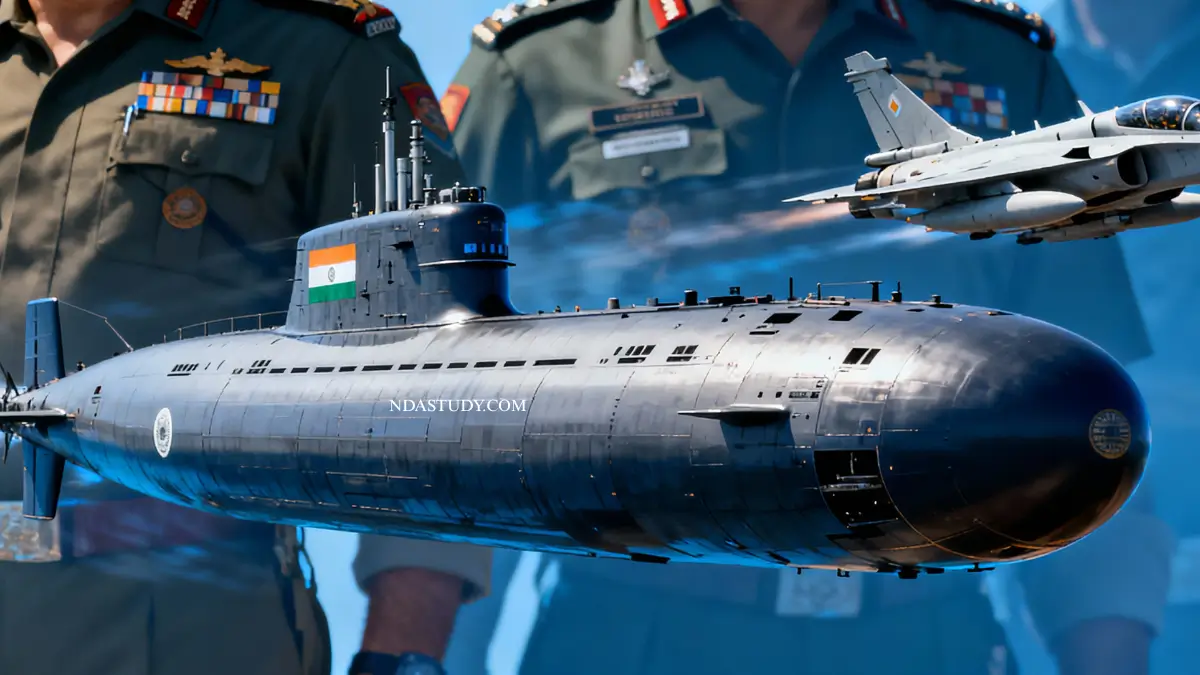
As India celebrates Navy Day 2025 on December 4, the Indian Navy stands at an unprecedented strategic milestone. Three transformative defence announcements dominate this year’s commemoration: the impending commissioning of INS Aridhaman (India’s third nuclear submarine), confirmed delivery of the first four Rafale-M fighter jets by 2029, and Navy Chief Admiral Dinesh K. Tripathi’s stunning revelation that Operation Sindoor kept Pakistan’s entire navy confined to port for seven months. Together, these developments mark India’s emergence as a formidable Indo-Pacific maritime power with credible nuclear deterrence and advanced carrier-based air capabilities.
The Nuclear Submarine Leg: INS Aridhaman Completes India’s Nuclear Triad
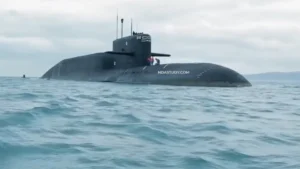
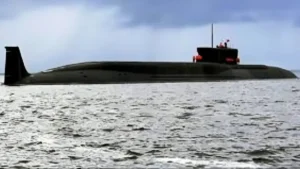
INS Aridhaman (SSBN-82) represents a watershed moment in India’s strategic autonomy. As the third Arihant-class nuclear ballistic submarine built indigenously at the Naval Dockyard in Visakhapatnam, Aridhaman completes India’s holy trinity of nuclear deterrence: land-based missiles, air-based fighters, and sea-based submarines.
Why INS Aridhaman Matters
The submarine’s significance lies in a simple but powerful strategic principle: three operational SSBNs simultaneously at sea ensure credible minimum deterrence under India’s no-first-use nuclear doctrine. This means even if two submarines are targeted, the third remains undetectable in the ocean, ready to retaliate. This is the essence of strategic stability.
Key specifications of INS Aridhaman:
| Feature | Details |
|---|---|
| Class | Arihant-class (6,000 tonnes) |
| Missile system | K-4 ballistic missile (3,500 km range) |
| Crew capacity | 111 personnel |
| Propulsion | 83 MW pressurized heavy water reactor |
| Acoustic stealth | Indigenous design, world-class quietness |
| Status | Sea trials ongoing, commissioning expected by end-2025 |
Timeline to Commissioning
- November 2021: INS Aridhaman launched by Navy Chief Admiral Karambir Singh
- 2022–2024: Extended sea trials for submarine systems validation
- December 2025: Expected commissioning on Navy Day 2025
- Future: Fourth SSBN (S5) under construction; fifth-generation designs being finalized
Strategic Impact: India’s Nuclear Deterrent Strengthens
When Aridhaman enters service, India joins an elite club of nations with credible sea-based nuclear deterrence. Currently, only five countries (US, Russia, China, France, UK) operate multiple SSBNs simultaneously. India’s achievement is remarkable because it’s indigenous design and construction—a testament to Made-in-India defense self-reliance.
“The commissioning of INS Aridhaman completes our ability to maintain three submarines at sea simultaneously, ensuring a credible second-strike deterrent that anchors strategic stability in the region.”
– Navy Chief Admiral Dinesh K. Tripathi
The Air-Sea Integration: 26 Rafale-M Jets Transform Naval Aviation
The Indian Navy is about to undergo a revolutionary transformation. The confirmed delivery of 26 Rafale-M fighter jets—costing approximately ₹64,000 crore (USD $7.6 billion)—will fundamentally upgrade India’s carrier-based aviation from the aging MiG-29K platform to a world-class modern fighter jet system.
The Rafale-M: A Game-Changer for INS Vikrant
INS Vikrant, India’s first indigenous aircraft carrier (operational since September 2022), was designed specifically for advanced carrier-borne fighters. For three years, it operated with MiG-29Ks—adequate but aging platforms. The Rafale-M changes everything.
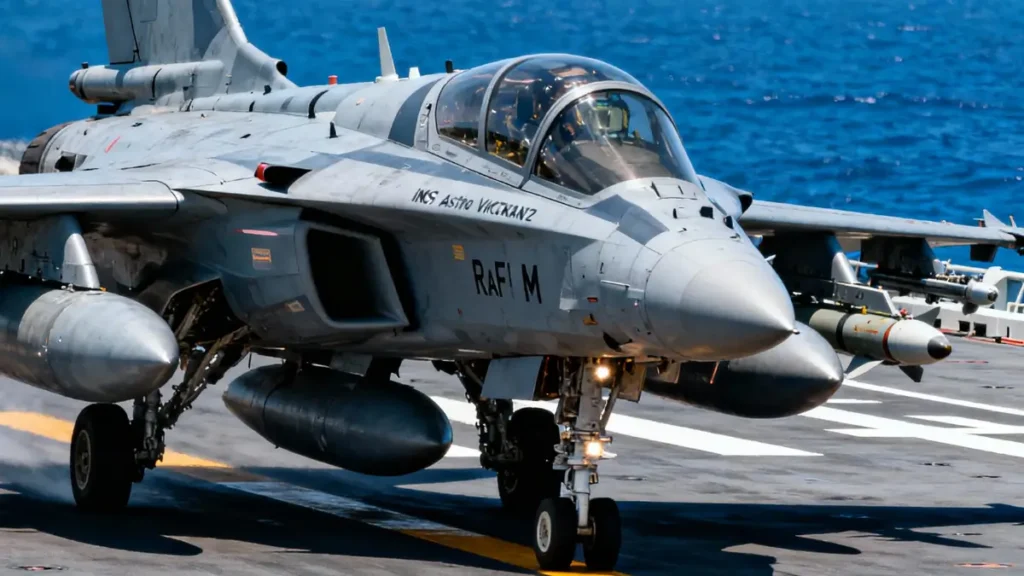
Rafale-M specifications (tailored for carrier operations):
- Combat radius: 1,850 km (significantly longer than MiG-29K’s 1,000 km)
- Payload capacity: 6,000 kg external weapons
- Speed: Mach 1.9+ (supersonic dogfighting capability)
- Avionics: AESA radar, advanced electronic warfare systems
- Carrier compatibility: Reinforced landing gear for carrier deck operations
- Air-to-air missiles: Meteor missiles (100+ km engagement range)
Delivery Timeline: The 2029 Milestone
The procurement agreement with Dassault Aviation (France) stipulates a staggered delivery schedule:
- 2029: First four single-seat combat jets + four twin-seat trainers arrive (8 aircraft)
- 2030: Additional 9 jets delivered
- 2031: Final 9 jets complete the order (26 total)
Pilot Training Begins in 2026
Starting 2026, Indian Navy pilots will train with the French Navy in Provence, France, ensuring readiness before the first jets arrive. This means India’s first Rafale-equipped Carrier Strike Group achieves operational status by 2030—a transformative shift in Indo-Pacific naval aviation.
Strategic Implications for Indo-Pacific Balance
With Rafale-M integration, INS Vikrant’s air group becomes comparable to mid-sized global carrier air wings. India can now:
- Extend strike range beyond 2,000 km with advanced sensors
- Counter China’s carrier air wing in the Indian Ocean with superior jet technology
- Protect critical sea lanes carrying $5.6 trillion annual trade
- Operate Meteor missiles with 100+ km engagement range—longest in the region
Operation Sindoor: Pakistan Navy Confined to Ports for 7 Months
The most stunning strategic revelation this Navy Day came from Admiral Tripathi himself: Operation Sindoor kept Pakistan’s entire navy locked in port for over seven months. This single fact reshapes understanding of India’s maritime power projection capability.
The Context: May 2025 Border Crisis
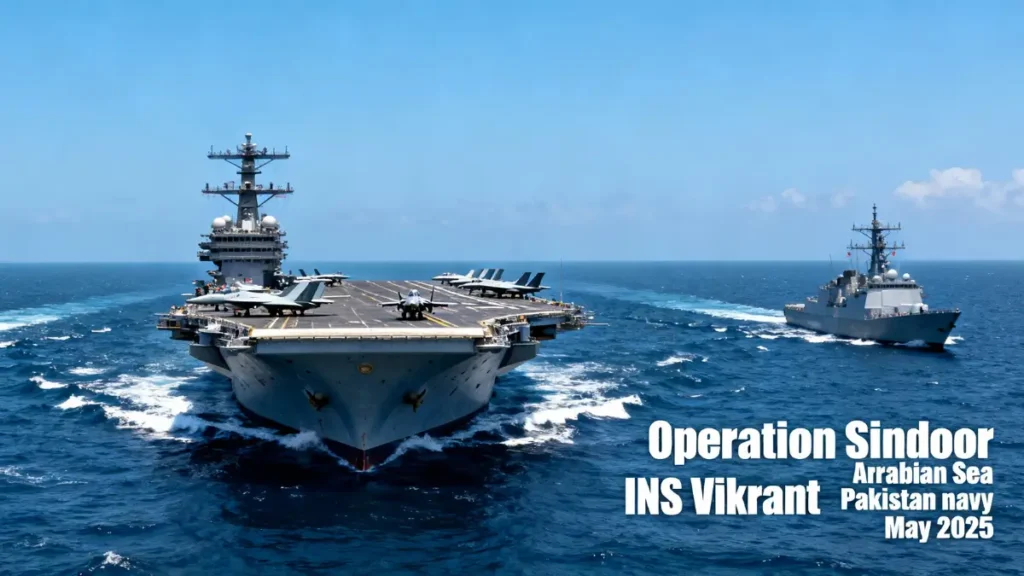
Following the Pahalgam terror attack (April 22, 2025) that killed 22 civilians in Kashmir, India launched a comprehensive military response. The Indian Navy’s component—Operation Sindoor—deployed the Carrier Battle Group (CBG) to the northern Arabian Sea in an unprecedented show of force.
How India Achieved Naval Blockade Without Firing a Shot
The strategy was elegant but devastating:
- CBG deployment: INS Vikrant with fighter jets, destroyers, frigates, and support vessels took position
- Sensor dominance: Advanced radar systems monitored every potential Pakistani naval movement
- Submarine threat: Indian Navy’s submarine fleet maintained constant pressure
- Air superiority: Continuous fighter jet patrols over northern Arabian Sea
Result: Pakistan Navy never ventured beyond its ports. Complete maritime denial achieved.
The Economic Cost on Pakistan
While exact figures remain classified, Admiral Tripathi acknowledged that Operation Sindoor imposed “significant economic consequences” on Pakistan through:
- Shipping disruptions: Pakistani cargo vessels unable to transit safely
- Export losses: Reduced textile and agricultural exports (Pakistan’s lifeline)
- Psychological deterrent: Pakistan Navy’s inability to contest Indian waters publicly humiliated politically
- Regional destabilization: Forced Pakistan toward quicker ceasefire negotiations
Seven Months of Sustained Readiness
Here’s what impressed defense analysts most: India maintained this dominant posture for 7+ months—from May 2025 through December 2025.
Operational metrics released by Navy Chief:
| Metric | Value |
|---|---|
| Flying hours logged | 50,000+ hours |
| Ship deployment days | 11,000 days |
| Active warship presence | 138 deployments (historical anti-piracy) |
| Current Red Sea operations | 40 capital ships |
| Ceasefire date | May 10, 2025 (vigilance continued) |
“The Navy was ready for what was demanded of us. Our aggressive posturing ensured Pakistan Navy remained confined to ports, protecting Indian maritime interests and economic zones.”
– Admiral Dinesh K. Tripathi, Navy Day 2025 press conference
India’s Global Maritime Footprint: 138 Deployments, 520 Lives Saved
Beyond military dominance, the Indian Navy’s humanitarian and security contributions deserve spotlight. Over 17 years of continuous operations, India has transformed itself into the guardian of global sea lanes.
Anti-Piracy Mission: Unbroken Vigilance Since 2008
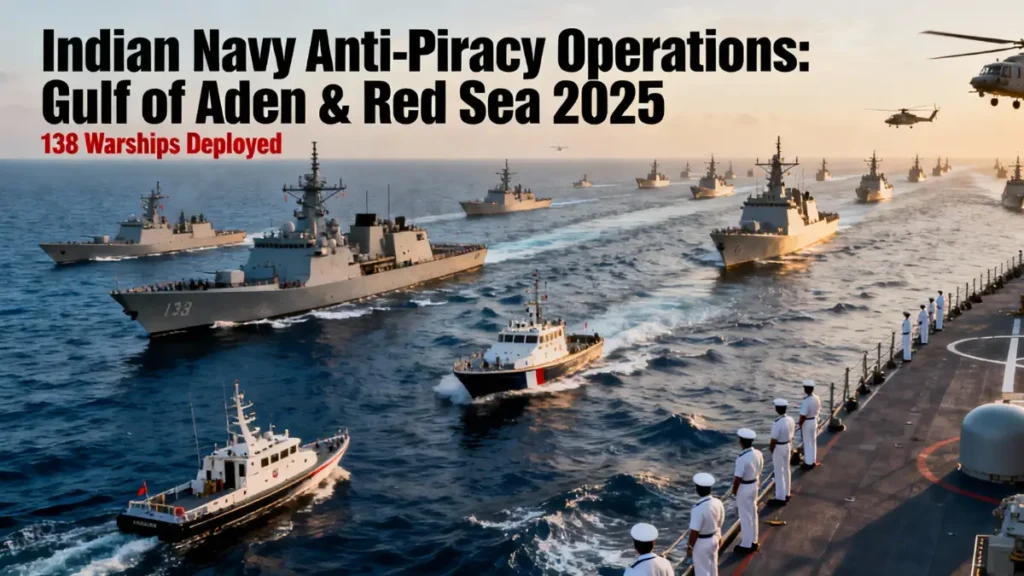
The Gulf of Aden and Red Sea remain among the world’s most dangerous waters. Since 2008, the Indian Navy deployed 138 warships in continuous anti-piracy missions—the longest unbroken presence by any nation.
Achievements in 2024–2025 alone:
- 7,800+ merchant vessels escorted safely (protecting ships from Somalia/Yemen-based pirates)
- 520 lives rescued at sea during emergencies
- 52 pirates arrested in recent operations
- $5.6 billion cargo value protected this year
- Zero Indian crew casualties in rescue missions
Global Presence: 64 Exercises, 21 Bilateral Partnerships
The Navy isn’t just defending Indian interests—it’s building regional security architecture:
- 21 bilateral naval exercises (with Japan, Australia, Singapore, Vietnam, etc.)
- 9 multilateral exercises (Malabar, IMDEX, MILAN)
- 34 maritime partnership engagements
- Bay of Bengal, Arabian Sea, Indian Ocean coverage 24/7
Navy Day 2025 Celebrations: President’s Vision for Viksit Bharat
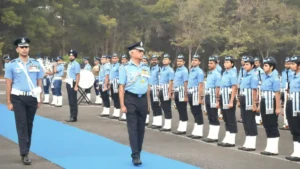
Navy Day (December 4) commemorates India’s 1971 naval victory—when Indian Navy’s Operation Trident struck Pakistani naval vessels in Karachi harbor. This year’s celebrations, held at Shangumugham Beach in Thiruvananthapuram, Kerala, showcased India’s strategic ambitions under PM Modi’s vision of Viksit Bharat (developed India).
President Droupadi Murmu’s Speech: Oceans as Development Engines
President Murmu emphasized three critical themes:
- Maritime security as foundation for economic growth
- Self-reliance in defence technology and submarine/carrier capabilities
- Humanitarian responsibility in the Indian Ocean Region (IOR)
Navy Chief’s Message: Seas Will Catalyze India’s Development
Admiral Tripathi quoted Sardar K.M. Panikkar, India’s legendary maritime strategist:
“If India desires to be a naval power, it must create sustained interest in oceanic problems. India’s prosperity lies in the seas; security in the seas.”
Admiral Tripathi
This message resonates profoundly: India’s $5 trillion Blue Economy aspiration depends on secure sea lanes—precisely what the Navy guarantees.
Navy Day Operational Demonstration Highlights
The December 4 celebrations featured live demonstrations:
- Naval commando drills (INS Abhimanyu special forces)
- Missile firings (BrahMos anti-ship missiles)
- Carrier flight operations (Helicopter displays from INS Vikrant)
- Submarine showcase (Mock underwater rescue operations)
- Cyber warfare presentation (emerging naval threats)
What’s Next? India’s 2026–2031 Maritime Roadmap
Navy Day 2025 marked the beginning, not the climax. India’s defence pipeline is staggering:
2026–2029 Milestones
| Year | Milestone | Significance |
|---|---|---|
| 2026 | Rafale-M pilot training begins (French Navy) | 24-month pre-positioning |
| 2027 | Fourth SSBN (S5) likely launched | Expanded deterrence capacity |
| 2028 | Next-gen destroyer class commissioned | 10,000-tonne air-defense platform |
| 2029 | First four Rafale-M jets arrive | Carrier air wing transformation |
| 2030–31 | Remaining 22 Rafale jets delivered | Full fleet operational by 2031 |
₹2.35 Lakh Crore Fleet Expansion
India approved 74 additional warships worth ₹2.35 lakh crore (USD $28 billion) over the next 5–7 years:
- 10 advanced destroyers (10,000 tonnes each)
- 8 advanced frigates (with indigenous radar systems)
- 24 corvettes (for coastal security)
- 11 offshore patrol vessels
- 6 next-generation submarines (advanced design)
- 6 maritime reconnaissance aircraft
- Second indigenous aircraft carrier (CVN) (under planning phase)
Fifth-Generation SSBNs: The Long Game
India’s Defence Research and Development Organisation (DRDO) is finalizing fifth-generation SSBN designs with capabilities that will surpass even current Western submarines:
- 13,500-tonne displacement (larger, more capable)
- 190 MW advanced reactor (faster, longer endurance)
- K-6 missiles (6,000+ km range)
- Advanced AI-integrated combat systems
- Ultra-quiet propulsion (matching US/Russian submarines)
Navy Day 2025: The Bigger Picture
Navy Day 2025 isn’t just celebration of past victories—it’s announcement of India’s transformation into a credible naval superpower.
Three interlinked developments signal this shift:
- Nuclear submarines complete strategic deterrence architecture
- Rafale-M jets modernize naval aviation to world standards
- Operation Sindoor success proves India’s ability to project power and protect 2+ million sq km of exclusive economic zone
Together, these mean Pakistan’s naval strategy faces unprecedented challenges. China’s regional influence encounters credible counter. India’s economic interests in the Indian Ocean gain military backing.
FAQs | Indian Navy Day 2025 & Developments
1. Why is INS Aridhaman significant for India?
INS Aridhaman is India’s third nuclear-powered ballistic submarine, enabling India to keep three SSBNs at sea simultaneously. This ensures credible second-strike nuclear deterrence—even if two submarines are neutralized, the third remains undetectable and ready to retaliate. This anchors strategic stability and makes India immune to nuclear coercion
2. When will India receive the first Rafale-M fighter jets?
The first four Rafale-M jets arrive by 2029, with twin-seat trainers arriving simultaneously. The remaining 22 jets deliver across 2030–2031. Indian Navy pilots begin training with the French Navy starting 2026, ensuring operational readiness before jet arrival.
3. How did Operation Sindoor impact Pakistan’s Navy?
Admiral Tripathi revealed that India’s Carrier Battle Group deployment forced Pakistan’s entire navy to remain confined to ports for 7+ months. This achieved unprecedented maritime denial without firing a shot, inflicting significant economic costs on Pakistan through disrupted shipping and trade losses.
4. How many warships has India deployed globally?
Since 2008, India deployed 138 warships in continuous anti-piracy missions in the Gulf of Aden and Red Sea. These operations protected 7,800+ merchant vessels, saved 520 lives, arrested 52 pirates, and ensured $5.6 billion in cargo safety this year alone.
5. What is India’s nuclear triad?
India’s nuclear triad consists of three delivery systems: (1) Land-based missiles (Agni series), (2) Air-based missiles (Rafale fighters), and (3) Sea-based missiles (submarines like Aridhaman). INS Aridhaman completes the sea leg, ensuring India can retaliate from underwater even if land/air bases are destroyed.
6. What is Navy Day and why December 4?
Navy Day (December 4) commemorates India’s Operation Trident victory in 1971, when Indian Navy struck Pakistani naval vessels in Karachi during the Indo-Pak War. It celebrates India’s maritime heritage, naval achievements, and role as guardian of global sea lanes. This year (2025), Navy Day marks three historic defence milestones.
The Bottom Line
Navy Day 2025 represents India’s moment of maritime transformation. With INS Aridhaman completing the nuclear triad, 26 Rafale-M jets revolutionizing carrier aviation, and Operation Sindoor proving battlefield dominance, India emerges as an undisputed Indo-Pacific power.
The next five years (2026–2031) will cement this transition. By 2031, India’s Navy will field three SSBNs, three aircraft carriers, advanced destroyers with Indian radars, and a fleet unmatched in the Indian Ocean region. Pakistan faces unprecedented strategic pressure. China encounters credible naval counter. Global powers recognize India’s role in maintaining maritime stability.
For NDA aspirants and defence enthusiasts, Navy Day 2025 signals an unmistakable message: India’s future is maritime, and the Navy is writing the script.
![Bharat Forge Develops Fully Indigenous Naval Propulsion System for Indian Navy [Explained]](https://ndastudy.com/wp-content/uploads/2026/01/Bharat-Forge-Develops-Fully-Indigenous-Naval-Propulsion-System-for-Indian-Navy-300x169.webp "Bharat Forge Develops Fully Indigenous Naval Propulsion System for Indian Navy [Explained] 5")